Why Is Your Workspace Still Stressing You Out?
You sit down to work, but your desk feels more like a battlefield than a place of productivity. Cables everywhere, screens at the wrong height, focus slipping by mid-morning—sound familiar? I’ve been there. But what if your space could work with you, not against you? After months of tweaking my own smart setup, I discovered small, life-changing tweaks that transformed my focus, comfort, and even my mood. Let’s talk about how technology, when used wisely, can turn your work area into a true ally. It’s not about having the fanciest gear. It’s about creating a space that supports you—physically, mentally, and emotionally—so you can show up as your best self, day after day.
The Morning Struggle Is Real (And It’s Not Just You)
Mornings used to be my undoing. I’d pour my coffee, sit down at my desk, and within minutes, I was already frustrated. My phone battery was dead because I forgot to charge it. The laptop was slow to start. My kids left crayons on the keyboard again. And the light? Either too dim or glaring right into my eyes. I’d spend the first hour just trying to get organized—plugging in cords, adjusting the screen, shuffling papers—before I even opened my to-do list. By 10 a.m., I was tired, scattered, and somehow already behind.
It took me a while to realize that my struggle wasn’t about laziness or poor time management. It was about my environment. Our spaces speak to us, whether we notice it or not. A cluttered, uncomfortable workspace sends a quiet message: This is going to be hard. And when you start your day feeling like you’re fighting your own desk, no wonder focus feels impossible. I used to think I needed more willpower. What I actually needed was a little help—from technology that understands real life.
Here’s the thing: we’ve been sold this idea that tech adds to the chaos. Too many notifications. Too many devices. Too many blinking lights. And yes, that’s true—when it’s not used with intention. But what if we flipped the script? What if your gadgets didn’t distract you but actually helped you breathe easier, think clearer, and move through your day with less friction? That’s exactly what happened when I stopped seeing my workspace as a collection of tools and started seeing it as a partner in my daily rhythm.
I’m not a tech expert. I don’t have a degree in engineering or design. I’m just someone who wanted to feel calmer, more in control, and less exhausted by the end of the workday. And once I began making small, thoughtful upgrades—ones that aligned with how I actually live—everything shifted. Not overnight, and not perfectly. But steadily. And the best part? These changes didn’t require a big budget or a complete overhaul. They started with awareness. And they grew from there.
How My Smart Desk Changed Everything
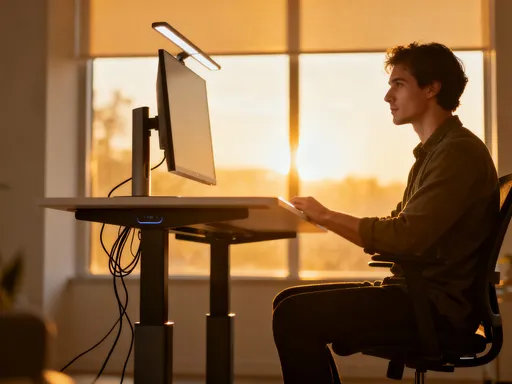
The first real game-changer was my desk. I know that sounds dramatic, but hear me out. I upgraded to a height-adjustable smart desk—nothing flashy, just one that remembers my preferred sitting and standing positions and has built-in USB ports. At first, I thought it was a luxury. Now, I see it as a necessity. Before this, I’d sit for hours, hunched over my laptop, only to stand up and feel like an old woman with stiff hips and a sore neck. I’d promise myself I’d stand more, but I never did. Out of sight, out of mind.
With the smart desk, standing became effortless. I set it to gently remind me every 45 minutes—just a soft chime and a small notification on the display. No pressure. No guilt. Just a kind nudge. The first week, I stood for maybe 10 minutes at a time. But over time, it became natural. I started craving those moments of movement. I noticed I wasn’t slouching as much. My back didn’t ache. And—this surprised me—I felt more alert in the afternoons. No more 3 p.m. crash.
But it wasn’t just about physical comfort. There was something emotional, too. Having a desk that responded to me—remembering my height, charging my devices, making standing easy—felt like a small act of care. Like my workspace was finally on my side. I didn’t have to fight it. I didn’t have to remember everything. It held some of the burden for me. And that tiny bit of support made a big difference in how I showed up for my work—and for my family.
People often ask if it’s worth the investment. For me, absolutely. Not because it’s high-tech, but because it supports my health in a way that’s sustainable. I’m not forcing myself to go to the gym more or start a strict routine. I’m just standing while I answer emails. That’s it. And over time, those small choices add up. My posture is better. My energy is steadier. And I feel like I’m taking better care of myself, not because I’m doing more, but because my space makes it easier to do the right thing.
Lighting That Matches Your Mood (Not the Other Way Around)
Next came the lighting. I used to rely on the same harsh overhead light all day—bright, white, and kind of unforgiving. It made everything look sterile, like I was working in a hospital hallway. And by mid-morning, I’d feel either too wired or completely drained. I didn’t realize how much the light was affecting me until I switched to smart bulbs that adjust color temperature throughout the day.
Now, my lights start warm and soft in the morning—like sunrise. It’s not just about brightness; it’s about tone. That gentle amber glow helps me ease into the day instead of jolting awake. It feels kinder. More human. By late morning, the light shifts to a cooler, brighter tone—closer to natural daylight. That’s when my focus kicks in. I feel more awake, more present. And in the evening, as I wind down, the lights gradually warm again, signaling to my brain that it’s time to slow down.
One of the most surprising changes? I stopped feeling groggy in the afternoons. I used to blame my diet or lack of sleep. But once I aligned my lighting with my natural rhythm, I realized how much artificial light had been throwing me off. Our bodies are designed to respond to light cues. When your environment supports that rhythm, everything feels smoother. I even started sleeping better at night because my brain wasn’t getting mixed signals from bright lights at 8 p.m.
Setting it up was simple. I used a smart lighting system that connects to an app on my phone. I programmed it to follow a daily schedule based on sunrise and sunset times in my area. No daily effort required. I can also adjust it manually if I’m working late or need extra brightness for a task. But most of the time, I just let it run in the background—quietly supporting my energy and focus without me having to think about it.
And here’s the emotional piece: my workspace started to feel more like a sanctuary. The lighting isn’t just functional. It’s comforting. It creates a mood. On stressful days, I’ll switch to a soft, warm setting even during the day—just to calm my nerves. It’s like giving myself a visual hug. And when I invite my kids to do homework nearby, they comment on how “cozy” it feels. That warmth matters. It tells everyone in the room: You’re safe here. You can focus. You can breathe.
The Power of a Single Control Point
One of the biggest frustrations in the early days of using smart tech was the fragmentation. I’d turn on my lights in one app, adjust the thermostat in another, start music in a third. By the time I got everything set, I’d lost my focus. I’d forget why I even sat down. It felt like tech was making my life more complicated, not simpler.
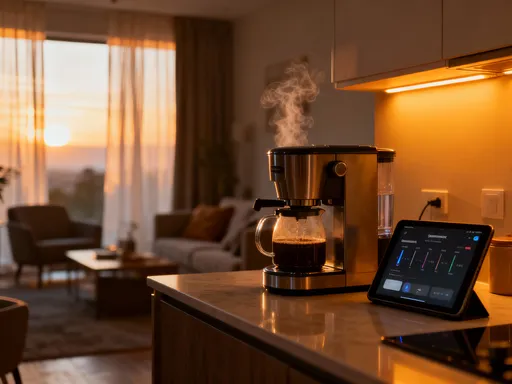
The turning point was finding a central control system—a smart home hub that lets me manage everything from one place. Now, I have a “work mode” routine. With one voice command—“Hey, start work mode”—the lights dim to my focus setting, calming instrumental music begins to play, the temperature adjusts to my ideal level, and even the air purifier turns on. It takes about ten seconds. And in that moment, my whole space shifts. It’s like a curtain rising on a performance. My brain knows: it’s time to begin.
What I love most is how this small ritual creates mental clarity. Instead of jumping into work haphazardly, I have a signal that prepares me. It’s not just about convenience. It’s about intention. That one command is my way of saying, “I’m ready. I’m present. Let’s do this.” And because everything happens at once, I’m not pulled out of flow by adjusting settings or hunting for remotes.
My husband noticed the difference right away. He said, “You seem calmer when you start work now.” And I am. Before, I’d be flustered, juggling devices, muttering about passwords. Now, I take a breath, say the command, and settle in. It’s a small thing, but it sets the tone for the entire day. And the best part? I can customize it. On days when I need energy, I’ll create a “boost mode” with brighter lights and upbeat music. On creative days, I’ll go for softer light and ambient sounds. It’s not one-size-fits-all. It’s designed for me.
Noise Cancellation and the Art of Deep Work
Let’s talk about sound. I work from home, and while that offers flexibility, it also comes with constant background noise—kids playing, the dog barking, the neighbor’s lawn mower, even the hum of the refrigerator. I used to think I just had to “get used to it.” But over time, I realized how much those little sounds were stealing my focus. I’d be writing an email and suddenly catch myself rereading the same sentence three times. My brain was working overtime just to filter out the noise.
That’s when I invested in smart noise-canceling headphones. Not just any pair—ones that adapt to my environment. They detect the type of noise around me and adjust the cancellation level automatically. In a quiet room, they’re barely active. But when the vacuum turns on or the kids start shouting, they kick in gently, creating a bubble of calm. I can still hear important things—like someone calling my name—but the constant background buzz fades away.
I also started using smart speakers that play personalized soundscapes. On focused days, I’ll choose a soft rain track or gentle forest sounds. On creative days, I might go for lo-fi beats or ocean waves. The key is consistency. When I hear that rain, my brain knows it’s time to dive deep. It’s become a mental trigger—just like the lighting and the voice command.
What surprised me most was how this helped me set boundaries—especially in a shared home. I don’t have a separate office. My desk is in the living area. But when I put on my headphones and the rain starts playing, my family knows: Mommy is in deep work mode. They don’t interrupt unless it’s urgent. It’s not about shutting them out. It’s about creating space where I can give my best to both my work and my family. When I’m focused, I finish faster. And when I’m done, I’m more present with them.
There’s an emotional safety in that, too. I don’t feel guilty for needing quiet. I don’t feel like I’m being antisocial. I’ve taught my kids that sometimes, Mommy needs her “focus sounds” to do her job well. And they respect that. One of my daughters even asked for her own pair of kid-friendly headphones so she could have her “focus time” too. It’s become part of our family rhythm.
Small Sensors, Big Awareness
Some of the most impactful changes came from the least visible tech—small sensors that monitor things I never used to think about. I installed an air quality monitor that tracks temperature, humidity, and CO₂ levels. At first, I thought it was overkill. But within days, I noticed a pattern: on days when the CO₂ level was high—usually because the room had been closed up for hours—I felt sluggish and unfocused. My thoughts were foggy. I’d reach for more coffee, but it didn’t help.
So I started opening the window every few hours. Or turning on the fan. Simple actions, but the difference was immediate. I felt sharper. More awake. It turns out that even slight drops in air quality can affect cognitive performance. And once I had that data, I couldn’t ignore it. The sensor didn’t fix the problem—it just made me aware. And awareness is the first step toward change.
I also added motion sensors to the lights in my workspace. They turn off automatically when no one’s in the room. It saves energy, yes—but more importantly, it reduces mental clutter. I don’t have to remember to switch off the lights. I don’t have to get up and do it. That tiny bit of mental relief adds up over time. It’s one less decision, one less task on my list.
These small tools don’t do much on their own. But together, they create a space that feels attentive. Like it’s looking out for me. They remind me that care isn’t always grand gestures. Sometimes, it’s a sensor that turns off the light. Or a gentle alert to open a window. It’s about designing a life where the little things don’t pile up and drain you. Where your environment quietly supports your well-being, even when you’re not paying attention.
This Isn’t About Gadgets—It’s About Growing Into Your Best Self
Looking back, I realize this journey wasn’t really about technology. It was about self-respect. It was about deciding that my time, my energy, and my peace of mind matter. Every upgrade—big or small—was a way of saying, “I’m worth the effort.” And the beautiful thing is, these changes didn’t just improve my workspace. They improved me.
I’m more focused. I manage my time better. I feel calmer, more in control. I’m not perfect—some days are still messy, and tech fails sometimes. But now, I have systems that help me recover faster. I don’t spiral as easily. I start over with more grace. And that resilience has spilled over into every part of my life—how I parent, how I connect with my partner, how I take care of myself.
When your space works with you, you stop fighting yourself. You stop wasting energy on friction. And that frees you up to grow. To create. To be present. That’s the real promise of smart technology—not flashy gadgets, but a life that flows with less resistance. It’s about designing a day where you’re not constantly putting out fires, but where you can actually breathe, think, and thrive.
So if your workspace still feels like a battlefield, I want you to know: it doesn’t have to be that way. You don’t need to overhaul everything at once. Start small. Notice what drains you. What frustrates you every morning? Is it the light? The noise? The clutter? Pick one thing. See if there’s a simple tech solution that can help. It might feel like a tiny change. But sometimes, the smallest shift opens the door to a whole new way of living.
Because at the end of the day, your workspace isn’t just where you work. It’s where you show up for your life. And when it supports you, you become more than efficient. You become capable. Confident. Calm. You become the person you’ve always wanted to be—just by giving yourself the space to be seen, heard, and cared for. And that? That’s the kind of technology worth investing in.